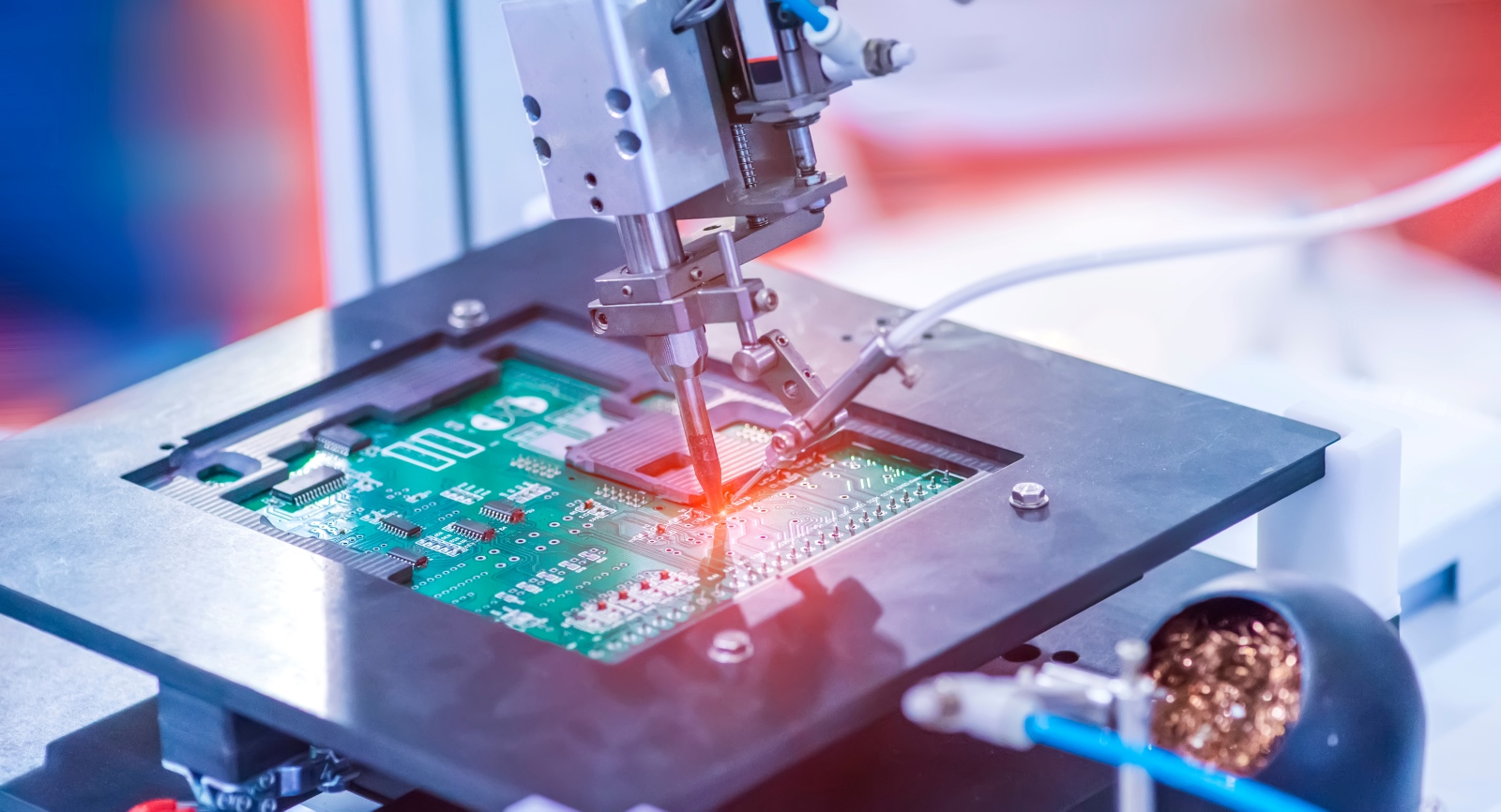
PCB(PCB (Printed Circuit Board) is the mother of all electronic products and the backbone of many electronic components, PCB manufacturing has dozens of processes from the opening of the material to the finished product packaging, such as dry process, wet process, etc., the process is long, the control points are complicated, and there are a lot of factors affecting the quality. However, almost every process will use chemicals, the quality of chemicals will directly affect the performance of the PCB board.
PCB requires very high quality for plating, plus the agent is often added in several times, so it needs excellent dispersing ability of agent and deep plating ability, and it is extremely sensitive to various metal impurities (e.g. iron, zinc, lead, tin, etc.) as well as organic impurities in the plating solution. Therefore, in the process of plating printed circuit boards, in addition to the immediate monitoring of ionic impurity contamination, the contamination of particulate impurities is also increasingly being emphasized.
The particle structure in the electroplating solution may cause the surface of the plating layer to be not smooth, rough, or burr, and too many particles may cause the particles to be coated by the plating layer to not be able to fully adhere to the substrate, resulting in defects of the plating layer peeling off. In order to monitor the amount of particles in the plating solution, a liquid particle counter is often used. The solid particles in the liquid are detected and analyzed by means of optical principles.
Liquid particle counters have the advantages of fast counting speed, good repeatability, and easy operation; however, they also have the disadvantages of not being able to classify impurities and having a small range of measurement values.
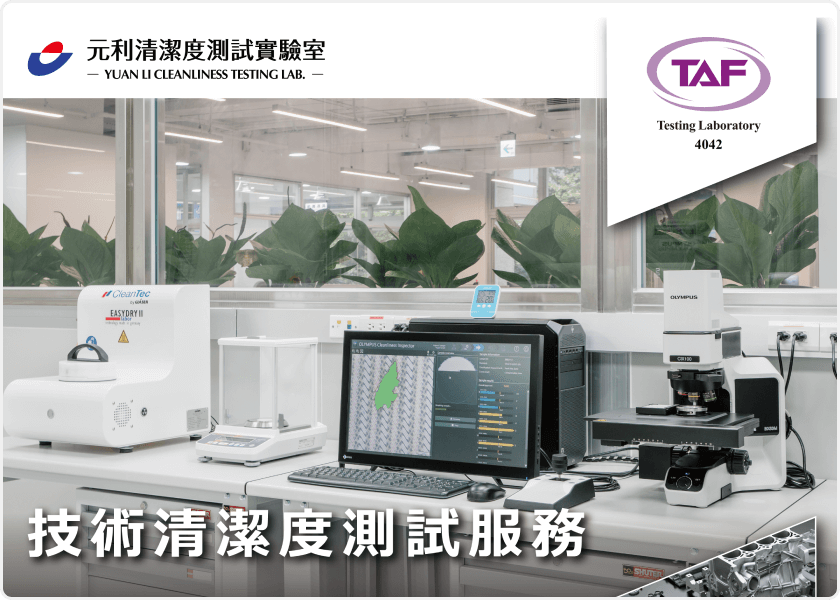
The CIX 100 cleanliness analysis system eliminates this problem. State-of-the-art particle profiling technology enables precise identification, quantitative analysis, and automated grading of impurity particles in plating baths. It has been introduced by many PCB manufacturers for fine quality control testing of their plating and the chemicals used.
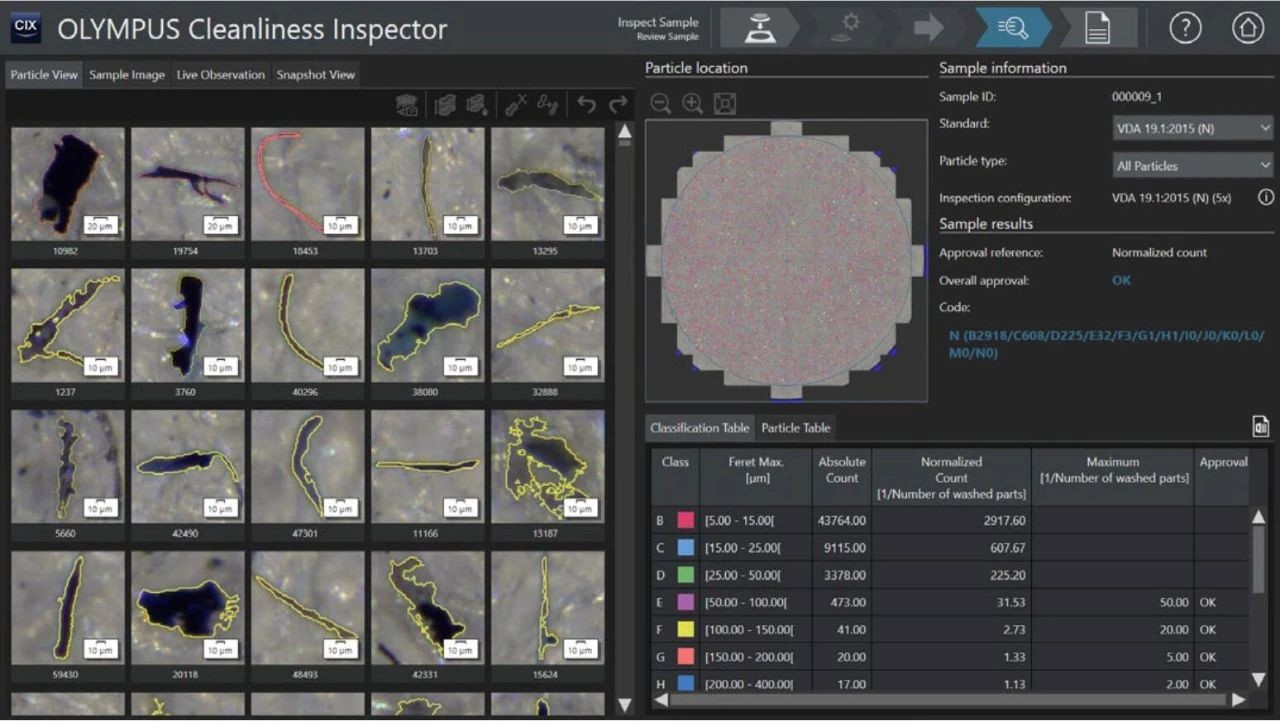
The CIX 100 Cleanliness Analysis System uses a patented polarization method for simultaneous high-performance image capture and precise real-time analysis of reflective and non-reflective particles from 2.5 microns to 42 millimeters in a single scan, displaying counted and sorted particles in real-time as they are scanned and classifying particles by size for real-time decision making.
At the same time, the CIX 100's statistics allow you to compare sample results obtained over time and analyze trends. On-screen graphs and tables show trends over time, simplifying the data review process. Data can be viewed within the software or exported to a format for documentation or further analysis, making it easier to determine the source of the particles and control the plating solution at the source.
Author:Cleanliness Laboratory Engineer Cheng Chia Ho/EditorEditor: Yeung Nga Tong