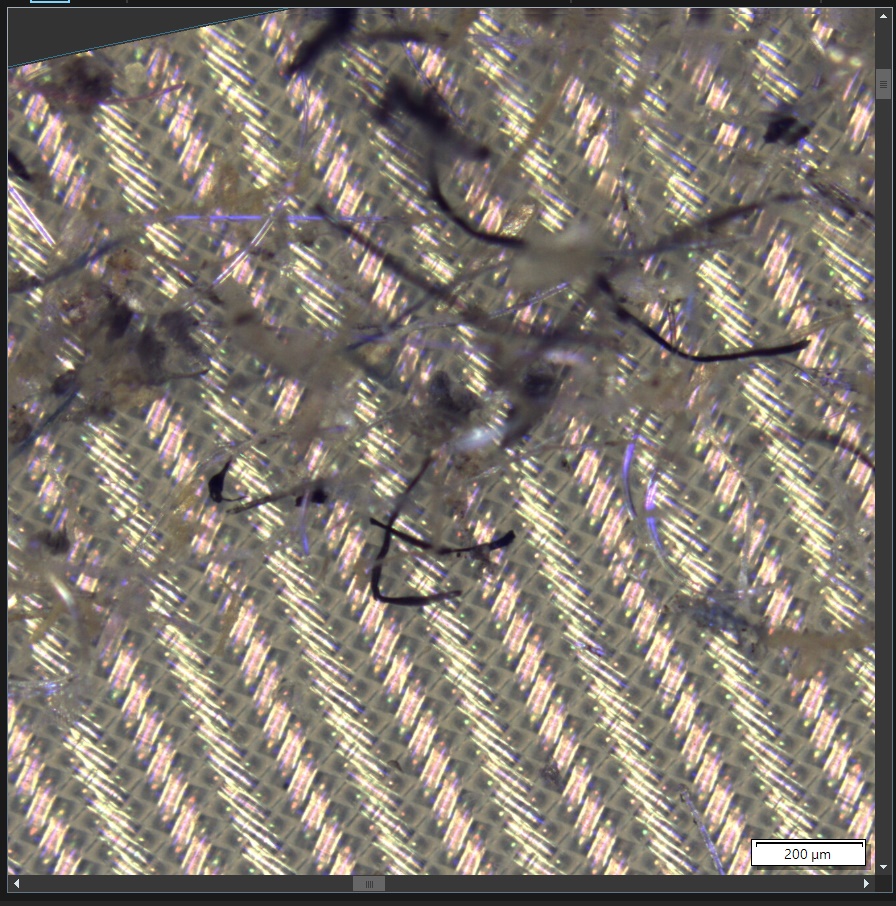
The cleanliness test standard VDA19.1 classifies contaminants as metallic particles, non-metallic particles and fibers. Of these, the most popular types are metallic and non-metallic particles, but the damage caused by fibers should not be overlooked and can also cause component failure.
Definition of Fiber
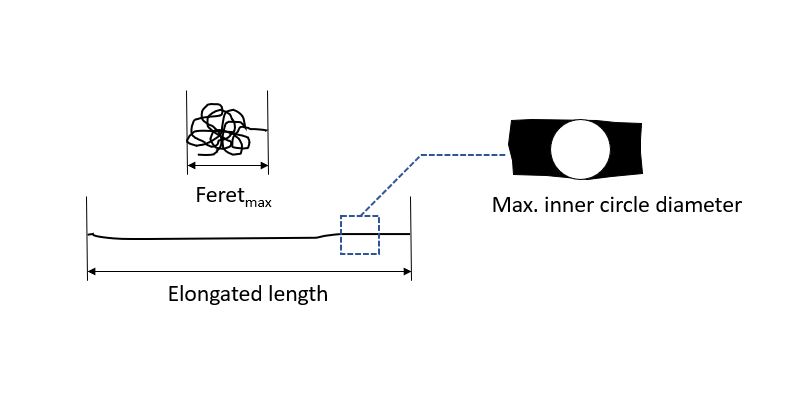
Fibers are made up of a wide variety of components. Plastics, textiles and minerals are common components. In VDA 19.1/ISO 16232, fibers are defined as follows::
- Elongated length/Max. inner circle diameter> 20
- Max. inner circle diameter <= 50 µm
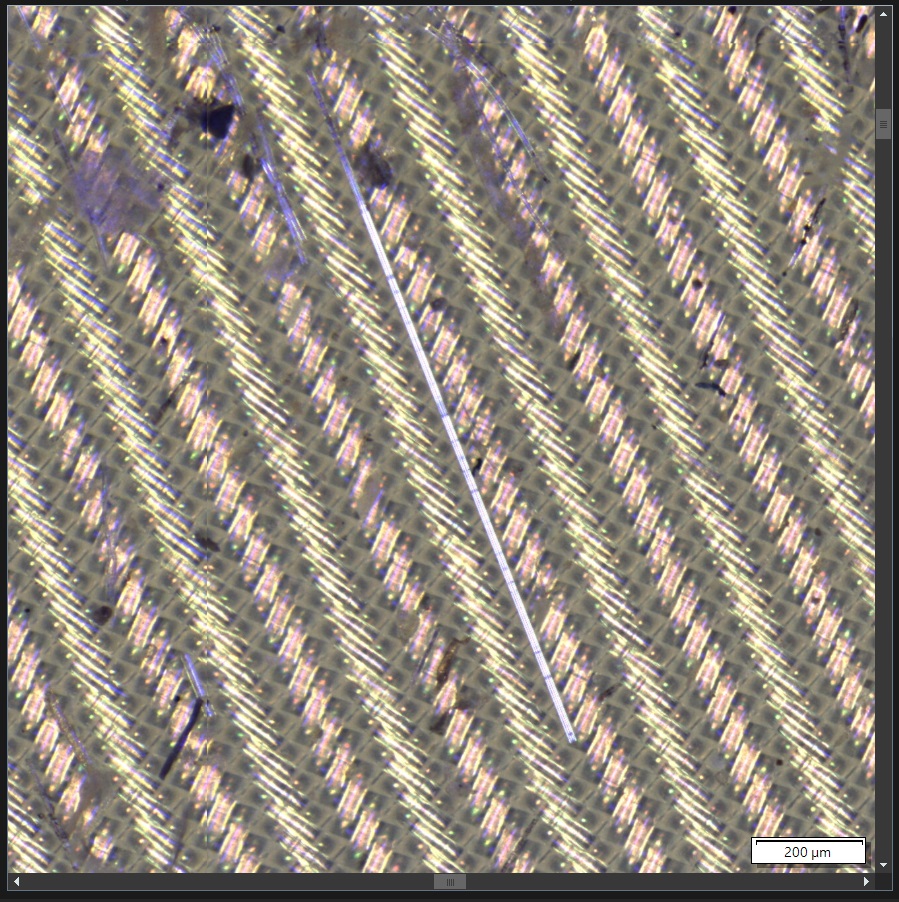
Fiber causes parts failure
Normally a single fiber has a limited effect on the product, however, the following conditions can cause the fiber to fail to function as a component.
- Excessive Fiber: This can cause aggregation between fibers, leading to clogging and failure of the component.
- Mineral FiberThe hardness of the material, such as glass fibers, causes damage comparable to that of particles.
Common causes of part failure include:
- cloggingFibers accumulate continuously during the operation of hydraulic or pneumatic systems, causing clogging in small pipes.
- shorts: Fibers become electrically conductive when exposed to moisture, causing electronic components to fail.
- Masking of optical or sensing elements: When fibers are attached to the camera lens or sensor, they cause blurring of the image or sensing errors.
How to Reduce Fiber Damage
Material analysis can be performed on the detected fibers, using a scanning electron microscope (SEM-EDX) for inorganic fibers or a Fourier Transform Infrared Spectrometer (FTIR) for organic fibers, to find out the source of the fiber according to its composition and to improve it. If necessary, we can refer to VDA19.2 for improvement in the areas of personnel, environment, logistics and production equipment.
The ubiquitous presence of fibers in the production environment is a potential source of component damage, and textile fibers in the air are difficult to avoid even in clean rooms. In particular, the total amount of fiber has a greater impact on function than a single fiber. The improvement process requires consideration of the labor and cost required to improve the process, and the risk can be effectively reduced through continuous monitoring of specific fiber compositions.
Author:Cleanliness Laboratory Engineer Yang Shengkai/EditorEditor: Yeung Nga Tong